- Home
- Businesses
Businesses
Offices, clinics, shops and workshops across San Angelo — one file per site, one report per visit, and one annual look at the whole of it.
01
What goes in a site file
- An inventoryEvery unit with its location, access, capacity, age and what it serves. Written once, corrected as it changes, and useful for years.
- Access notesWhich ladder, which hatch, which gate code, who to ask for and what hours the work can happen in. This is the part that quietly decides what a visit costs.
- Readings per visitNot a tick — actual figures, so the file shows a unit losing capacity over three years rather than failing without warning.
- A replacement orderWhich unit is next, what changing it involves on a live site, and which budget year it belongs in.
02
The buildings we keep files on
- Offices and professional suitesPackaged units and splits, zoning that stopped matching the floor plan several tenants ago, and west elevations that lose every afternoon in summer.
- Clinics and consulting roomsRooms that need their own temperature and their own air, on the clinic's hours rather than the building's.
- Shops and trade countersA door open to the weather all day on equipment sized for a sealed building.
- Workshops and light industrialUnit heaters, extract, make-up air and an office at the front on something else entirely.
- Churches and hallsLarge volumes used intermittently, where the control strategy matters more than the capacity.
- Multi-unit sitesOne file, one report and one number to ring, rather than four contractors and no history.
03
The things that fail without telling anybody
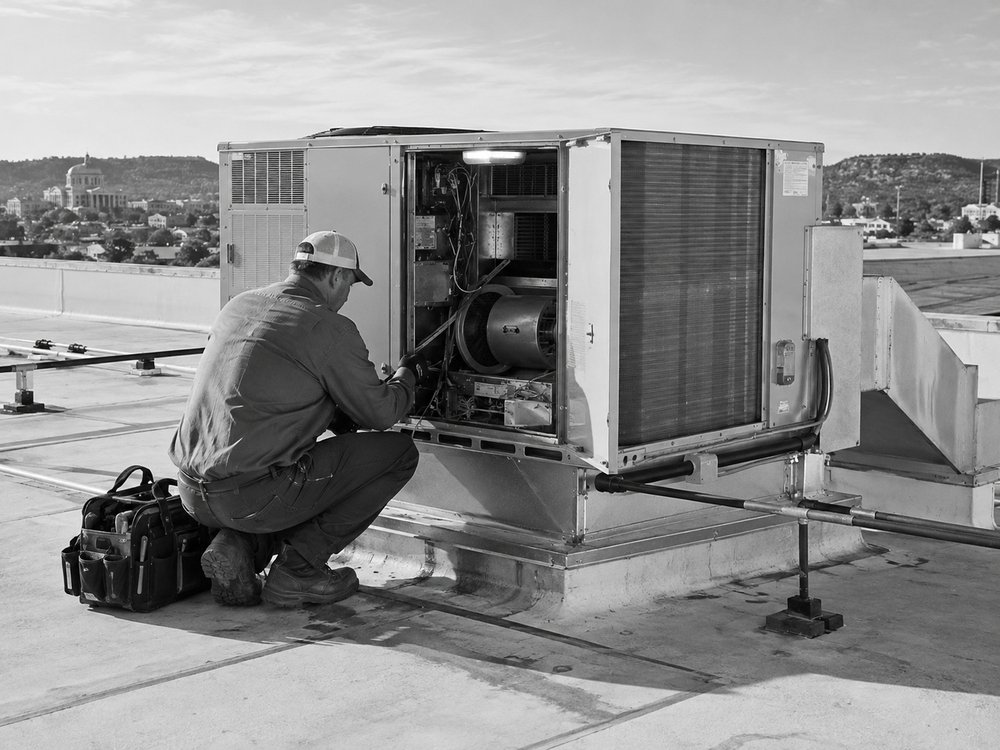
An economiser damper that has stuck, a control schedule left by a previous tenant, a condensate route above a ceiling, a unit heater that has not run since March. None of them throws a fault and none of them is noticed until it matters.
They are on the visit list because they are in the file. That is the entire argument for keeping one.